Magical Collector of Lost Teeth and Childhood Dreams
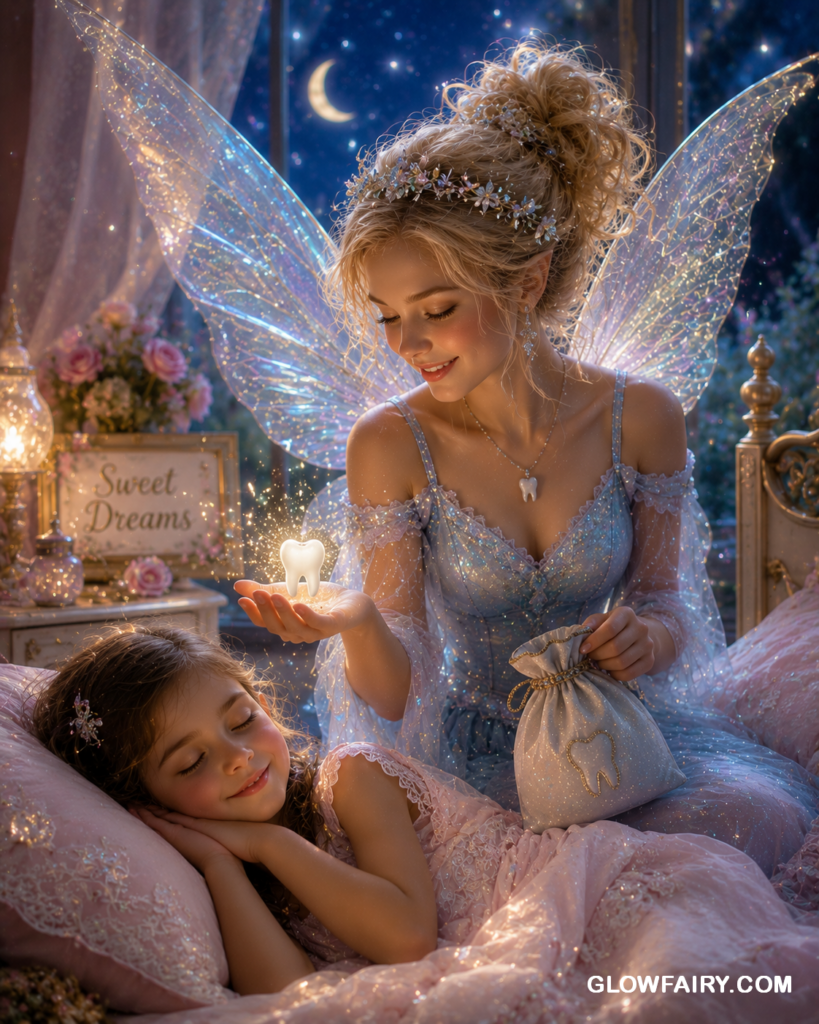
The Tooth Fairy is one of the most beloved magical figures in modern folklore. For generations, children have placed their lost baby teeth beneath their pillows, eagerly anticipating a nighttime visit from this enchanting fairy who exchanges teeth for coins, treasures, or small gifts.
Unlike many fairies that dwell in forests, gardens, or enchanted realms, the Tooth Fairy has a special connection to childhood. She represents growth, transformation, and the exciting milestones that mark a child’s journey toward adulthood. Today, the Tooth Fairy remains one of the world’s most recognized fairy characters, inspiring stories, artwork, costumes, and magical family traditions.
The Lore of the Tooth Fairy
The modern Tooth Fairy is often depicted as a tiny winged fairy who quietly visits sleeping children after they lose a tooth. According to popular tradition, she collects the tooth from beneath a pillow and leaves a reward in its place before disappearing into the night.
While today’s version of the Tooth Fairy is cheerful and familiar, the tradition evolved from much older customs surrounding lost teeth. Throughout history, many cultures believed that baby teeth held magical significance and should be carefully protected or disposed of in special ways.
Some modern fairy stories imagine the Tooth Fairy living in a magical kingdom where lost teeth are collected and transformed into sparkling castles, fairy dust, moonlit bridges, or enchanted treasures. Other tales describe vast libraries where every tooth tells the story of a child’s growth and adventures.
These imaginative interpretations have helped expand Tooth Fairy lore far beyond the simple exchange of teeth for coins.
Historical Origins of the Tooth Fairy Tradition
Unlike many fairies rooted in ancient folklore, the Tooth Fairy is a relatively modern creation.
The custom of rewarding children for lost teeth became popular during the early twentieth century, particularly in North America. However, the tradition draws inspiration from much older practices.
Throughout Europe, children were often encouraged to bury, burn, or safely dispose of lost teeth because they were believed to contain magical power. Some cultures thought animals could gain influence over a child if they found the discarded tooth.
In parts of Scandinavia, children received small rewards for lost teeth, a custom that likely contributed to the development of the modern Tooth Fairy tradition.
Over time, these various beliefs blended together, eventually creating the magical fairy figure recognized today.
The Tooth Fairy in Books, Movies, and Popular Culture
The Tooth Fairy has become a major figure in children’s literature and entertainment.
Popular appearances include:
- Children’s books explaining the Tooth Fairy tradition.
- Animated films featuring magical tooth-collecting fairies.
- Fantasy stories about secret fairy kingdoms.
- Television specials centered around losing baby teeth.
- Countless original fairy tales created by parents and educators.
Many modern versions portray the Tooth Fairy as kind, wise, and dedicated to helping children feel excited rather than nervous about losing teeth.
The Symbolism of the Tooth Fairy
The Tooth Fairy often symbolizes:
- Growing up
- Transformation
- Childhood milestones
- New beginnings
- Imagination
- Magic
- Confidence
- Positive change
Losing baby teeth can be an emotional experience for children. The Tooth Fairy helps transform that experience into something exciting and memorable.
Much like butterflies symbolize transformation, the Tooth Fairy represents one of the earliest visible signs of growth and change during childhood.
Different Tooth Fairy Traditions Around the World
Many cultures have their own versions of the Tooth Fairy tradition.
United States and Canada
Children place lost teeth beneath their pillows and receive money or small gifts.
Spain and Latin America
Many children are visited by a magical mouse known as Ratoncito Pérez rather than a fairy.
France
A similar mouse character called La Petite Souris collects children’s teeth.
Various European Traditions
Some cultures encourage children to throw lost teeth onto rooftops or bury them for good luck.
These traditions demonstrate how widespread the fascination with lost teeth and magical visitors has become.
How to Create a DIY Tooth Fairy Costume
A Tooth Fairy costume can be whimsical, elegant, or playful.
1. Choose a Fairy Dress
Popular colors include:
- White
- Silver
- Pale pink
- Lavender
- Soft blue
- Pearl tones
Flowing fabrics help create a magical appearance.
2. Add Fairy Wings
Tooth Fairy wings often feature:
- White feathers
- Glitter accents
- Pearl details
- Iridescent shimmer
Soft, delicate wing styles work especially well.
3. Create a Tooth Fairy Crown
Popular accessories include:
- Crystal tiaras
- Pearl crowns
- Star headbands
- Moon-themed circlets
Some creative cosplayers even incorporate tiny tooth-shaped charms into their headpieces.
4. Carry a Tooth Fairy Wand
Decorate a wand with:
- Stars
- Pearls
- Crystals
- Glitter
- Silver ribbon
A sparkling wand helps complete the magical look.
5. Tooth Fairy Makeup
Popular makeup ideas include:
- Glitter highlights
- Pearlescent shimmer
- Crystal face gems
- Soft pastel colors
- Sparkling accents
The goal is to create a gentle, magical appearance suitable for a fairy who visits sleeping children.
Essential Items Every Tooth Fairy Needs
Fairy Wings
One of the most recognizable elements of the costume.
Magical Tooth Pouch
Many Tooth Fairy stories depict the fairy carrying a small pouch for collecting lost teeth.
Crystal Wand
Perfect for spreading fairy magic.
Fairy Dust
Glitter or shimmer products help create a magical effect.
Tiny Lantern
Some fantasy versions of the Tooth Fairy carry lanterns while traveling through the night.
Treasure Satchel
A small bag filled with coins, gems, or magical gifts reflects the traditional role of the Tooth Fairy.
Creative Tooth Fairy Party and Decoration Ideas
The Tooth Fairy theme is popular for children’s parties and fairy gardens.
Ideas include:
- Tooth-shaped fairy houses
- Miniature fairy doors
- Glittering coin displays
- Crystal castles
- Moonlit fairy scenes
- Fairy treasure chests
These decorations help bring Tooth Fairy stories to life.
Why the Tooth Fairy Remains So Popular
The Tooth Fairy endures because she transforms an ordinary childhood milestone into a magical adventure. Generations of families have passed down Tooth Fairy traditions, creating cherished memories and exciting rituals for children.
Unlike many legendary fairies that remain hidden in forests or fairy realms, the Tooth Fairy feels personal and familiar. She visits children’s homes, leaves gifts, and becomes part of family traditions that are remembered for a lifetime.
Whether appearing in books, movies, fairy art, costumes, or bedtime stories, the Tooth Fairy continues to inspire wonder because she represents one of childhood’s most magical moments—the realization that growing up can be exciting, meaningful, and filled with a little bit of fairy magic.